Runner's Footprints

Runner's Footprints

Wednesday, April 17, 2019

Boston Marathon & Race Tips

Reflecting on my past years at Boston, I am grateful to have returned each year. Here I share my times for my last nine Boston Marathons and 2016 Boston Recap with race tips that are specific to Boston. Many can translate to any race distance or marathon. Thank you for reading!


2016 BOSTON RACE
It's usually our best performances that leave us glowing for days. However, it's our most challenging or defeating days that can leave us questioning ourselves: what went wrong? After I completed my 7th Boston Marathon, I felt defeated, deflated, and disappointed. It left me emotional wondering why. After reflection, I realized there are sometimes other important things to learn from any experience. In 2016, my heart was missing my family and thinking of Ecuador. 


Race Morning:
My body rose as clockwork before the alarm. I cracked open one eye to see all my hotel roommates already dressed and making final pre-race meal prep. Race morning had arrived. My insides turned to think it came too fast. After the LA Marathon, I took a six week break from racing and focused on losing weight I had recently gained due to stresses in February. I had arrived to the LA Marathon start line with an excess of 7lbs I had gained in the previous three weeks due to emotional eating. I was battling a recent car accident, my last living grandparent fell ill, my past was giving rise to some drama, and I was dealing with a court battle against an officer who used 'excessive force' while stopping me during a run with my boxer, Bruno. I resorted to unhealthy eating habits for comfort. After LAM, I knew I needed to stop the downward spiral I was falling into, so I cleaned up my eating lifestyle and refocused on trying to find positives. Fortunately, with some very strong focus, I lost the 7lbs I had gained and an additional 5lbs for a net weight loss of 13lbs spread over a span of two months before Boston race day. I felt stronger, livelier, and overall happier with a renewed sense of energy. Boston race day rolled around and I was determined that I wanted to achieve certain goals for Boston. 

We gathered in the lobby with our gear bags and internal race adrenaline ready to toe the start line. We all were informed how it would warm up on race day upwards to a 25 degree difference, but when we stepped outside into the 44 degree crisp morning, we all remained hopeful: the temp high couldn't be that bad. 

Gathering at Boston Commons, we stepped onto the shuttle buses that transport +30,000 runners to the start line in Hopkinton and the nervous chatter began. Normally, I insert my earbuds, play my pre-race music, and get into the zone. But this time, I knew I was off. I ate my first half of breakfast which included home-baked bars made by my friend, Laura, and a protein bar. I immediately fell asleep on the one-hour shuttle ride to the start. My mind was tired and when we arrived, I knew my mind was distracted enough to fall asleep. I knew it. I missed my sister who I had recently gotten in a little tiff after Easter, but we did make up just before the race. She is my strongest cheerleader and I felt her void. I was worried about my dad who was visiting Ecuador. I was worried about family and community in Ecuador that had experienced a 7.8 magnitude earthquake where the death toll was rising. How could I concentrate? I didn't mention anything to my friends because I didn't want to distract anyone else's race day. 

My mental game is my strongest asset come race day and thinking I was off was bad news. I tried to focus. I tried to think about how I was going to execute, but I couldn't. Part of me just wished I didn't have to run. This thought rarely happens to me on race day. The congestion at the start line drained my phone and made it die early. I couldn't text or call my sister, my dad, or anyone when I normally do right before the start. I felt like a lost soul. Weird in a field of over 30,000, but I did. 

Wave 2 went off at 10:30am and I settled into my corral. Once I crossed the start line: game time. I eased into my planned race pace and caught myself still checking my phone trying to revive it to reach my family one last time. Bad idea. My pace for the first 10K dropped below my planned strategy and then at that point I just told myself oh well let's just hold on. Bad idea again. In many instances, it is a bad idea to bank time. I knew I was going to pay for it later and I did. The warm temps and baking sun heated my body and by mile 8, I felt the dead legs coming. Why so early? Because I wasn't focused? Every aid station, I drank electrolytes, I drank water and tossed a third cup over my head. I looked around and thought: I wish I was standing on the sidelines cheering for everyone else. Why couldn't I just get my game face on? Because I wasn't looking inside my mind. I was mentally wandering elsewhere. By mile 13, I was desperately holding on. Runners were walking the aid stations due to heat so early and I wanted to walk along with them so bad. But I knew if I did that was it. I would significantly slow my overall pace and could easily just say oh let's just run the rest for fun. I knew I would kick myself for doing that later because that's not me. I wanted to keep digging. This is why I came to Boston. I came to see what I can do whether I was well prepared or not, I know we can always try. I felt the tears welt in my eyes at Mile 13: How could I let myself down? Wrong thoughts, but they came. The energy of the crowds was the only thing that kept me going. Their cheers for absolute strangers is so uplifting and my favorite part of the Boston course: Wellesley College. The energy and excitement of the college girls are an absolute hoot and I love them! My tears covered a smile as I watched them cheer us on and hand out kisses. Once I passed Wellesley, I was back in my head. Not a good thing at this point. 

Mile 16: the Newton hills began. I pushed but I had no oomph. Tears came again. Why was I so emotional today? Every 5K when we passed a timing mat, I slowed more and more, despite trying. Every mile, I was slowing. Goal A slipped. Goal B slipped. Mile 19: Goal C slipped. I felt defeated. I felt heavy. Not my body but my heart like I couldn't push my mind like I normally would. Then I heard it: NADIA!!!!!!!! I looked to my left through my slow shuffle up Heartbreak Hill and there was Linda. She had flown red eye the night before to come cheer on her sister and she cheered emphatically for me when she saw me. I cried so much inside. She reminded me of my sister, Angela. How I missed her so much. I cry now as I write this because I love my sister so much and felt so angry at myself for allowing something silly to cause some hurt feelings. Linda screamed at the top of her lungs and practically jumped over the barricade fence: GO NADIA GOOOOO!!! I saw my sister in her and it was all I needed. I smiled, tucked my head, and pushed up Heartbreak Hill. I may or may not have gone any faster, but the little fire inside was lit up again all because of Linda-- she reminded me of my sister. I can't give up. I can't give in. I needed to keep trying. My legs screamed in fatigue and throbbing pain because I had started too fast. The damage was done and now I needed to do what I could to shuffle forward. Finally, the final 5K. If I continued as I was, Goal C was taunting me by seconds! I pushed. I huffed.

No more tears, only determination to get one foot in front of the other as quickly as I could. I was cutting it so close. The Boston crowds were mesmerizing as usual cheering emphatically for everyone. Boston Strong adorned large over a street overpass in the final mile. I was going to keep trying. Another slight incline right before we turned on Boylston. I felt like I was dead sprinting. Seconds. Seconds away. I opened my stride as much as I could through the burn, through the heart warming finish line. If you've ran down Bolyston, you know it is a mesmerizing energy. Mile 26, my watch clocked 3:35. I missed all my goals then I crossed the finish line. I gave everything I had and fell short 43 seconds. After a few steps, I saw Tim. "How'd it go, Nadia?" I immediately sobbed; I couldn't do it today. I didn't have it in me. He shared, "I know. I fell short today too. Next time. You know what you have to do." Next time was true. 

* * *

BOSTON RACE TIPS

RACE EXECUTION
Race day performance comes down to two primary factors: 1) how well you have trained and 2) how well you strategize your race execution. The two go hand in hand. For any given race, any distance, any terrain: If you lack training, then you will need to rely more on your race execution. If you're well trained, you still aren't ensured the 'perfect' race performance because something may go wrong in race execution. Race execution takes practice -- consistently following a strategic training plan that is tailored for you AND mentally preparing race execution race day are both key. Here's how I do it: 

  • Embrace the process. Fitting in the training is difficult with life's responsibilities but if you really want to reach your goal, remind yourself every single time: drop the excuses and show up for yourself. You have to do it.
  • Embrace the suck. It's supposed to be hard or else everyone would do it.
  • In other words: get comfortable being uncomfortable.
  • Biggest key: practice your hardest training sessions while visualizing your race day over and over. Once you have done it several times, do it again.
  • Training in groups is great. Relying on pacers is awesome. However, you need to train solo as well to develop the mental strength to dig yourself out when it gets hard out there. 
Every distance from the 100m, mile, marathon to ultra require its own strategic training plan, strategy, and execution in order to be done to its fullest potential. A professional sprinter can train an equal amount of volume/time as an ultra athlete; the main difference is the training plan and the race execution. I practice racing several distances -- learning to push myself on my own is mental training that strengthens the ability for race execution. Group or personal pacers during a race are an asset and advantage; however, to develop a strong race execution, a competitor needs to develop that strength during training on their own as well. Believing in yourself and practicing that belief DAILY is a skill not only in sports, but also in academics, professional life, and relationships. Winning isn't everything, but aiming to try your best fundamentally gives you the most personal growth. Practice race execution in training. Allow yourself to visualize yourself succeeding. Also allow yourself to recognize that there is a possibility of failing and learning to be resilient. Resiliency keeps you going in the long run.


WEATHER
The Boston Marathon in April on the east coast can throw anything at you weather wise so be ready and train in anything: heat, cold, headwinds, tailwinds, and/or rain. After nine Bostons, I've experienced all of the above. In your training, if the weather calls for far from optimal conditions, get out there. Boston will throw anything at you. On race day, toughen up and adjust your pace if it's warm or your body will slow down dramatically in the 2nd half. 2012 Boston had peak record heat temps. 2018 Boston had peak record cold/wind/rain temps. Prepare for anything. 


TRAVEL
Several articles have shared that the number of days you arrive before race day should equal the number of time zones you cross. This isn't feasible for most so practice traveling across time zones to a race before Boston so you can learn how your internal body clock adjusts. Everyone is different. Some may need more time; others may need less and also depends physiologically with age. If you are unable to practice with race day travel before Boston, then practice in training. Do some of your hardest long runs on 2-3hrs of sleep or after 3-4 consecutive days of very little sleep. Compounding fatigue is real. Your body will learn how to push hard when it is sleep deprived. Despite what some may say their bodies have adjusted to, our bodies NEED sleep as a regular routine. It is completely normal to not sleep the night before the race so don't stress about it: adrenaline will have you amped on race day regardless. It's the entire taper week prior that you should be training less therefore banking in on sleep. 


COURSE 
The Boston course relative to other major marathons offers such a unique challenge to a competitive group of runners. A little taste of everything: a deceiving net downhill course, downhill first half that can potentially crush the quads, and a series of short and longer hills beginning from mile 17 to 26. When you are racing a road race, you feel every single incline. 

The biggest tip for a marathon: learn to hold back the first half. THIS is especially important for Boston because you need your quads to smash the hills in the 2nd half. Smash your quads by going too fast in the first half (by eccentric contractions that occur in downhill running) and you will be fighting to hold on for dear life in the 2nd half.

Collective research has shown that elite and age groupers alike have ran their fastest personal performances at Boston by running a 1-2 min positive split. What does this mean? If you are in 3:28 (+/-2min) marathon shape on a flat course then your possible time goal is 3:30 at Boston. Run the first half at 1:44 and second half at 1:46-- which translates into holding back just the right amount and then turn on the fire for the second half. If you have a larger positive split, research states: you most likely started too fast for your race day potential. If you have a negative split at Boston (depending how large), it either meant you held back too much in the first half OR you were a beast hungry up Newton and Heartbreak to run faster and stronger over hills. in the second half. My fastest Boston marathon finish times are also aligned with this 1-2 min positive split theory at Boston. Please note: these numbers are the same on all marathon courses. It's unique to Boston. A coach can help strategize your race day potential with numbers. 


Boston is truly special and worth experiencing. If it is your goal to Boston Qualify, go for it. Get hungry for it. Visualize it daily. Don't say someday. Say today I will start taking small steps towards my goal. It's the small steps we take day after day that get us closer to our big goals. Have high expectations for yourself. I hope to continue to earn the privilege to return to Boston every year or at least I will keep trying. Running provides that gift and we all have the beautiful potential to find the better versions of ourselves every single day. If you need a training plan to reach your next marathon PR or BQ, email me your three goals and we can get started. 

2016 Boston Memories with Great Friends


Wednesday, October 17, 2018

San Gorgonio Summit 11,503'


We get one special life on this world. Every morning or night, I take a moment to ask myself: how did I make today amazing, what am I grateful for, or how will I make tomorrow great? I found my fire early in life, but just like with any fire, you have to continuously feed it fuel for it to remain ignited. The more you feed it, the more it will flame. Taking these moments of reflection, meditation, and mindfulness are very important for everyone. It allows us to have direction, look back on how far we've come, and also to be present to appreciate what is around us. If we allow ourselves at any stage of our life to focus too much on the future, past, or present, the others will suffer. Therefore, we should give ourselves that space to work on ourselves to be balanced within our mind and spirit. We never know when our time will end in this lifetime either decades from now or tomorrow, living purposefully takes conscious effort -- and this does not take a great deal of money. It takes time in creating the mental space within ourselves and making the decision: yes, I will live today focused, grateful, and purposeful. 

Almost losing my life on an ice cliff, almost losing my sister's life whitewater rafting, almost losing my father's life to cancer, and losing all my grandparents to chronic health problems have given me personal perspective that I will not and cannot take a day for granted. The road to achieve our goals and personal definition of success can be a lonely road. Find what ignites your fire and keep that flame up because in the end when we are in our last months of life, we never say: I wish I would have worked more, had that luxury car, bigger house, etc. We say: I wish I had more time. You have the power of now. 

****


Timeline: 

Vivian Creek Trailhead 
10:40am start - 6000’
11:40am Mile 3 (1:00) - 7900’
1:40pm Mile 8 (3:00) - 10,800’
2:07pm Summit (3:27 up) - 11,503’
30min lunch
2:37pm leave
5:40pm finish (2:43 down)

Weather: 
start 51F
summit 25F windchill // 10-15mph winds (mild)
finish 55F


Caloric Intake: 
200 Vital4U, electrolytes, eggs - wake up
400 PB sandwich - 2hrs before start
200 almond butter packet
100 Stryve biltong stick
300 pita chips, pineapple
200 stryve stick, Vital4U - Mile 8
500 avocado sandwich, Matcha almonds - Mile 8.5 Summit
300 almonds - Mile 11
400 snack peas - Mile 19 finish
700 ceviche and brown rice bowl - home

3,300 TOTAL


Rehydration Strategy: 
3L of water with electrolytes:
 * 1L morning/during drive
 * 1.5L ascent to summit
 * 0.5L descent to finish


My first solo and successful summit of Southern California's highest peak. Always check mountain weather first, have the proper gear from head to toe, navigation, training, and extra fuel/hydration in case of emergencies. Always inform someone of your exact location, start, end, etc. If it is your first attempt, do NOT go alone. I have been on this mountain and all SoCal peaks several times in the past twenty years. I wanted to take the plunge to go solo and happily enjoyed every peaceful moment of no service. Trek on safely, friends. 


Goals and dreams that make you wake up excited are always worth it. 
Never stop dreaming and striving towards them however difficult it gets. 

Wednesday, September 14, 2016

Ruco Pichincha Summit 15,413'

The Andes Mountains are filled with volcanoes and peaks for the elevation seeking soul. Quito, the capital of Ecuador, sits nestled inside the Andes at 9,000' with several volcanoes relatively nearby to choose to ascend. A few to play with are:

Ruco Pichincha 
Guagua Pichincha
Sangay
Reventador
Los Illinizas
Antisana
Corazon
Cayambe
Chimborazo
Cotopaxi

My first visit to Quito was at the age of nine when my mom was finally granted US Residency; she happily then brought us to Ecuador to visit our extended family for the first time. It was then as a child that I fell in love with the mountains. My mom is from very humble beginnings in the countryside Loja where we would need to trek at least one mile for running water to them camel buckets back home. I ran around the Andes hills unknowingly that the love was deeply planted then. 

I usually visit Ecuador once every three years on average to 'play' in the mountains and visit family. This time, I came to celebrate some pre-birthday activities with my father. I had my eye on Ruco Pichincha to start as eventually my dream is summit to 19,000 and beyond. I did my research and was a little nervous about summiting my first foreign major summit. But we all need to start somewhere. 

Getting to Ruco:
From Quito, the best method to reach Ruco is take an inexpensive taxi ride (about $2-4 USD) to the base of el TeleferiQo, the highest tram ride in the world. Opening in 2005, it travels about 20 minutes taking you from the base in Cruz Loma at 10,000' altitude to 12,900' altitude, the top of el TeleferiQo. It runs 9am-7pm daily at $4.50 per Ecuadorian resident or $8.50 for foreigners. Make sure to bring your passport or any government ID. I used my CA Driver's License. 

Weather: 
Year-round Quito holds relatively the same weather pattern at the equator: 50s Fahrenheit during the day / 40s Fahrenheit at night with varying wind patterns and thunderstorms. It's mountain weather at 9000'. So time your summit attempt when Quito has really great weather. The sunrises at approximately 6am and sets at 6pm year-round. We were very lucky Quito had a 'warm' day in the 60s and clear sunshine. Thunderstorms or heavy cloud cover usually roll in at higher elevations in the late afternoon so you don't want to be at the summit 2-3pm or later. The later it is, the more risk you take as you descend the rocky scrambling terrain. Recently at the time of this writing, a couple separate groups of locals and foreigners got lost near the summit being found the next days hypothermic. Never take summiting higher elevation lightly. Mountain weather dictates your summit and safety. 

Our summit:
We started relatively late at 11:30am so I calculated a hard turn around point at 3pm: we turn around no matter what wherever we are. I was determined for the peak, but also nervous my dad wouldn't make it due to a stomach virus he was fighting for a week prior. So I packed his nutrition and hydration filled with high density calories and coca tea. I also made him pack in layers. With unpredictable mountain weather you always want to have a base tech layer, 1-2 insulating layers, and a wind proof/waterproof outer layer. My dad tends to run cold so I made him pack extra. We were fortunate to have good weather in the high 40s and mild 15-20mph gusts. That was challenging for my dad, but something I was accustomed to fortunately. 

We began our trek at the top of el TeleferiQo at 12,800' elevation. Thin beautiful marshmallow cloud filled sky. Taking it one step at a time, my dad and I aimed for the summit. He set the pace and I watched him cautiously making sure he was drinking and eating. The best way to handle altitude is do what you can to avoid the early signs of altitude sickness: headaches, dizziness, nausea, light headedness. Keep hydrating before your thirsty. Keep snacking as caloric expenditure is higher at higher elevations. Surprisingly, my dad was on a mission. He held a brisk pace and I followed trotting behind carrying extra food and layers just in case anything was needed for us. 

As we neared the peak, I gazed around and tears began to gather in my eyes. Grateful. Happy. To be right where I was. Climbing in such a beautiful landscape and bringing my dad along to get a taste of what I love so much about the mountain tops. I cried because it had taken so long for me to become grateful to be where I am currently. Three years ago, my life drastically changed leaving me very lost. I didn't know who I was anymore. I didn't want to live anymore. I didn't understand how one's heart can hurt so much with such a deep pain inside. Losing something that defines us, something that becomes a part of us, feels like darkness. During times of severe hardship or drastic loss, some resort to self-destructive behavior: drugs, abuse, or worse suicide. Because we are confused with pain. Pain that seems will never go away. What did I do? Resort to the mountains. I couldn't understand what had I done so wrong to feel so much pain. I couldn't understand why everything seemed to be at the height of my life then lose the most meaningful things in my life. But now I know. To learn. To learn to value what you have because you never know what you have until you lose it. Three years ago, I made some major changes in my life and sold almost everything of high monetary value that I owned and only kept my laptop, car, and my two precious companions: Max and Bruno. I needed to redefine myself. To help myself find value again on what is important within me. As my 32nd birthday approaches, I have battled a cancer scare in solitude, divorce, heartbreak, infertility, betrayal, and I know there is still so much to learn. On the bright side, I have my freedom, my ability to climb mountains, my precious dogs, and my inner fire reignited again to seek my life goals. That was what I lost. But I have found it again and even if I needed to start again, I know now I am strong enough to try again. I know I rather die adventurously than live miserably. 

We approached 15,000' altitude, the first time I had every broken that mark. I took a moment to take a deep breath in. And out. Beauty exists around the world; we need to take the moment to exhale and experience it. I looked above and ahead and saw what I had read about and what my dad had feared: the last 500' of scramble to the top. The beautiful mountain landscape had turned into a daunting, dark rocky terrain that towered over our heads. We climbed on all fours grasping for dear life and breathe. Our pace slowed as each exhale I felt I was becoming more and more lightheaded. My dad lead the entire way and he continued to do so on the scramble. I would lose sight of him around the rocks and he would shout: Cachito! I'm right here, I'm coming. Truth was, I was very nervous. To get hurt, fall, or get seriously injured. Suddenly I hear my dad yell ecstatically: Cachito we made it!! The summit is here! My desperate face for air turned into a wide grin as I forgot I was scared and quickly crawled to the top. I stood there with my dad smiling. He took his first video as he narrated it climb. Tears gathered in his eyes as I saw behind his reading glasses. My old man made it and I knew what it meant to him. I knew what this meant to me. Gratefulness. Gratitude to be alive to be experiencing this exact moment with my father. We made it. 

The greatest of all evils is: comparison. If you find yourself comparing yourself to what others have, you will not have the time to value what you have. To have the time to nurture what you have. We can look at our situation and be disappointed or we can try to work on the areas that need working on. This is how I wanted to celebrate life. Inhaling the beauty. Exhaling the negativity. One day at a time. 

***

Ruco Pichincha 15,413'
Summit
Moving time (1:48)
Total time (2:30)

Round Trip
Moving time (2:57)
Total time (4:15)

Calories Consumed:
Breakfast - smoothie, yogurt with granola & fruit (500)
Mile 0 - tamale (300)
Mile 3 - banana, almond butter, kimbolito (500)
Summit - granola (200)
Finish - trail mix (200)
Total (1700)

Route Details:
Mile 0 - 12,800 
Mile 1 - 13,500 -- 700' gain
Mile 2 - 14,200 -- 700' gain
Mile 3 - 15,000 - 800' gain
Mile 3.3 - 15,500 -- 500' gain 
Total route 6.5mi, 3000' gain

12,000 altitude
13,000 altitude
15,000 altitude
15,413' summit

Wednesday, September 7, 2016

Langley Summit 14,042'


I craved a higher altitude than 12,000' so I researched a peak and went for it. As Labor Day weekend is a very popular weekend for outdoor activities, all hotels were sold out in Lone Pine, which sits at 3700' elevation and a 3 hour drive north from LA. Next best thing: car camping. Coordinating with a couple friends who were planning their double 14er summit weekend, we all stayed overnight at Horseshoe Meadow Campgrounds, where the trailhead to the summit begins and sits at 10,000' elevation under the stars. 

It was a crisp night at 37F and I had forgotten my sleeping bag. I slept in all my gear layers and wasn't enough. I may have gotten maybe 3hrs of interrupted sleep due to discomfort, not ideal when trying to climb to 14K the next day. Overnight, I drank almost a liter of water due to an increased thirst at elevation. Tip: Try to space out your hydration throughout the days prior. 

Mile 1. We started on the Cottonwood Trailhead shortly before 6am when the first sun rays began warming the tops of the pines. No permit is required if you are not camping overnight in the wilderness. Only a parking pass is required for $6. We began with the intention to summit, but keeping priority first that weather and/or our bodies may not allow for a summit. The first five miles meander through the serene tree lined wilderness and climb slightly over 1000' collectively, a very gentle climb. At Mile 4, you come to a section where the trailhead breaks off to New Army Pass or Cottonwood Lakes. We ran into a couple who recommended Cottonwood Lakes (Old Army Pass, it's a mile less, is steeper, and much more scenic). 

Mile 6. You climb only another 200' where it opens up to the beautiful meadows, crystal lakes, and get your first view of the gnarly rocky ridge you will need to ascend. The 360 degree terrain is mesmerizing. After reaching the rocky ridge base around Mile 6 at 11,200' elevation, you begin the most difficult half of your ascent. The majority of hikers at this point are carrying only a day pack to summit as they camped overnight at the lakes to split the ascent over two days. Tip: Drink, eat, drink, pace, and listen to any early signs of altitude sickness especially as you climb to higher elevations.

Mile 8. When you reach the top of the ridge breaking 12,000' elevation, the views in front of you are mountain range after mountain range, something my soul simply loves to see. Turn around to see what you just climbed in less than two miles will shock you. Welcome to the Sequoia National Forest. 

Mile 9. The climbing becomes forgiving again for the next two miles, climbing only about 800', so if you're an avid climber, this may not phase you. If you're sensitive to altitude, this will tax you. Mile 9.5 at 12,500', we stopped for a 30min lunch eating my foot long subway sandwich. The extra jalapeño and mustard on chicken with veggies hit the spot. After this point, we all went on our own pace to the summit. Less than two miles left to the summit; it will be the most challenging 1500' gain of the day. Be prepared for some scrambling, crawling on all fours, and being brought to complete stops (for most). 

Mile 10. Above 13K, this is where it gets real if it hasn't already. Pushing the effort, I passed hiker after hiker. My goal: get absolutely uncomfortable (safely) to the summit. I was nauseous, sleepy, lightheaded, and breathing heavily. It felt awesome! Inside, I missed this extreme type of discomfort due to altitude. The feeling of pushing so hard you want to vomit. I was uncomfortable yet so happy to be right where I was.

As my birthday nears, I always take the month to reflect and celebrate if I can where my life has brought me, asking: have I accomplished what I wanted this past year? What areas have I grown in? What areas do I still need to work on?  Normally, most do this during the New Year; however, I find my mind is more reflective at different times. I usually do it during my very long or difficult training days, therefore, I enjoy reflecting often. I took a moment to look around at the vast open space and gave thanks. Thanks for suffering in life. Thanks for losing. Thanks for failing. Thanks for the insatiable hunger to keep learning. Because if I had not suffered, lost, or failed, I wouldn't be the woman I am today.  

I reached the summit and allowed myself to enjoy it for an hour until my body could not take the cold any longer. Some found a signal at the summit; I stayed disconnected to take in that moment. We were as high as cessnas fly. But we didn't fly up there; we climbed on foot and our bodies can do that. Survive discomfort. Survive suffering. Survive pain. One thing it does is it teaches us: we are strong enough. We are capable to endure more. 

Get comfortable with being uncomfortable. To go further. To go faster. To go higher. It's when we're uncomfortable where we learn. Learn what we really can do. 

***

Mt. Langley 14,042'
2016 - 9:30 moving time, 12hrs total time
2017 - 6:18 moving time, 8hrs total time 

Start:
Horseshoe Meadow Campground at 10,000' altitude 
Cottonwood Lakes Army Trailhead: 10.5 miles to summit
Elevation Gain: 4,000'


Sept Temps:
10K - 37F overnight 
11K - 46F day
12K - 50F day
Summit - 32F, 20mph winds
10K - 45F evening 

Calories consumed:
Mile 0 - Vital4 U energy + fruit salad (500) 
Mile 4.5 - chips, string cheese (500)
Mile 9.5 - footlong subway, almonds (1000)
Mile 11.2mi - 2nd Vital 4U, bar, yogurt, nuts (600)
Mile 12.5 - yogurt, nuts (400)
Mile 16 - Bar (100)
Mile 22.4 - soup + crackers (300)
Hydration - 3L of water with electrolytes (200)
Total during activity (3600)

11,000 altitude via Cottonwood Lakes

Friday, July 29, 2016

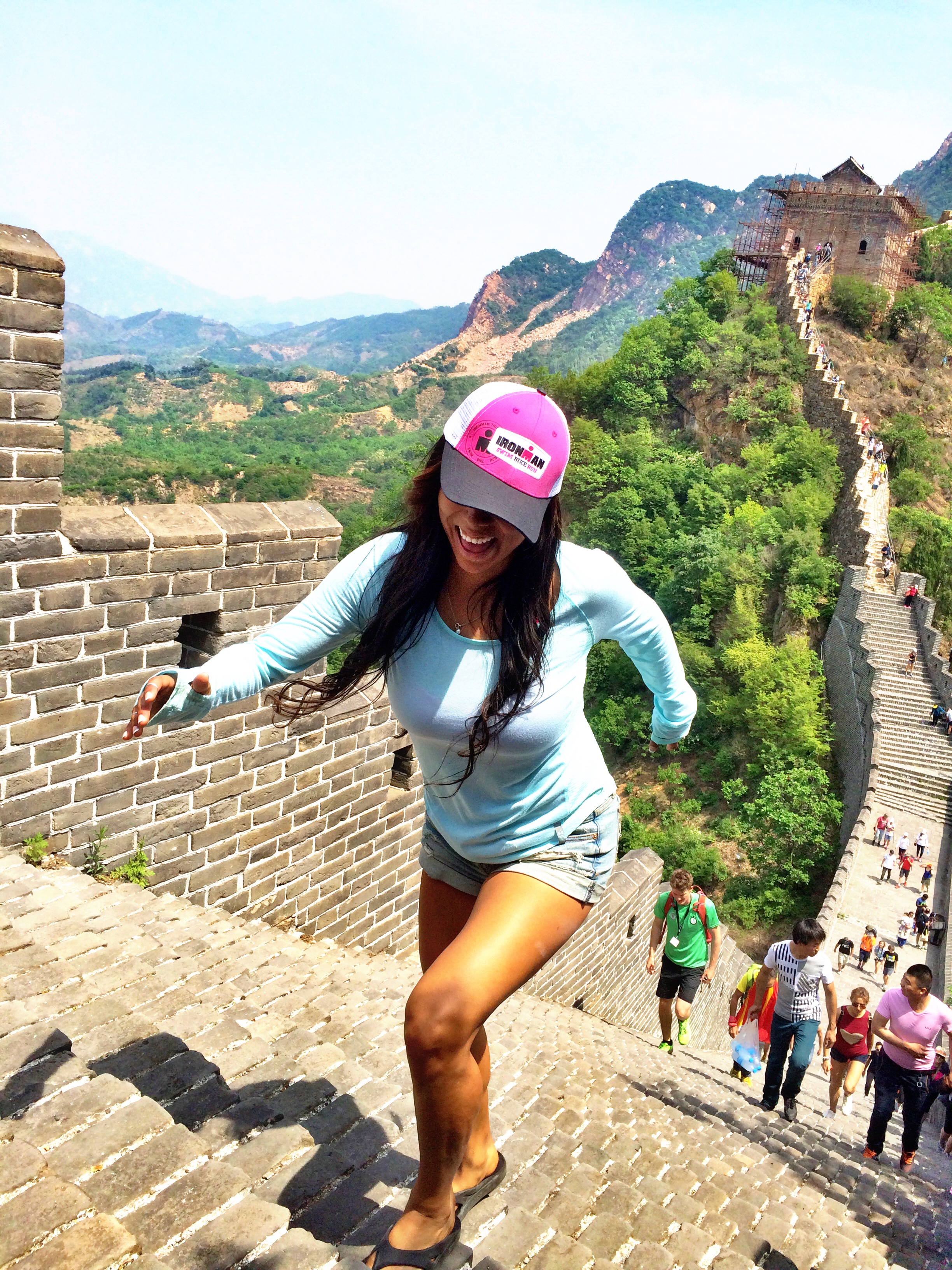
Great Wall of China Marathon

Race Report & Tips


My first solo international trip was at age 11. I went to visit family in Toronto, Canada. As a little girl, flying in a plane alone, I felt like an eagle. My parents trusted me to be brave as the airlines escort children traveling alone to ensure their safety. When my 15th birthday came around, my mom asked: would you like a 'quinceñera'? My quick reply: "No. May I use the $3,000 you plan to spend and take an educational school trip to London?" In 1999, quinceñeras weren't as costly as they are today -- some way too outrageous in my opinion. My mom was disappointed to not to plan a party for me however supportive. I traveled with a small school group of six with chaperones sightseeing the historic sights of London, watched plays, and experienced history. I decided then exploring the world would be of high importance in my life. Exploring the world is when I felt I could embrace different cultures, learn about different values, and open my mind to accept the world's differences. 

At age 16, my 3rd international trip was to Bavaria, Germany. Coming from an immigrant family, we did not have the disposable income for these expenses, however, I was taught how to manage and save money. At age 16, I fundraised $800 for a city-sponsored student exchange program to Bavaria, Germany for three weeks by selling boxes of chocolates. It was the trip of a lifetime. As a teen, I traveled to Europe to experience its culture and it taught me tolerance and acceptance. We should never judge other cultures due to a country's history. Through turmoil, we can be fed biased or skewed view via news and social media. Exploring a country with a native family exposed me to the good in people, people can change, and my heart will hold onto that. 

At age 17, I moved out to live at my UCLA campus. My fourth international trip was to Jerusalem, Israel at age 19 with a college group. We had six armed soldiers escort us the entire trip as we went sightseeing historical cites, the Dead Sea, and more. My parents were afraid I went, however, I have found that we often fear what we don't know. Yes, there is an inherent danger; however, that is true for everywhere. Within a 20 mile radius of wherever we live, there can be many dangers that we always need to be aware of. Learning to be mindful makes us more conscious citizens. Fear stops us from living. 

At age 20, after I completed undergraduate and graduate school in 2005, I discovered international marathons. I was ecstatic! This is when I wanted to combine my travels with running races. I chose a dream race, made a financial plan, and ensured I took the steps daily to get myself one step closer to my goal race. It could have been the NYCM or Bermuda Marathon. Train daily, save daily, skip on Starbucks (because, yes, it's overpriced in my opinion), pack work lunches (saves up to $4K annually), and, for me, practice family planning. It's the little things we do daily that collectively get us to our big goals. I don't believe in a "bucket list". I had a cancer scare in college that I never made public and it scared me horrifically. I endured it alone by choice not telling my family and I was afraid. What is the point of only working for retirement in our 60s, 70s, 80s? What if we never make it? What about our 30s or 40s? I am for planning for the future, while opening our hearts to living in the present. I vowed to have a to-do list instead. There are things that are definitely out of my control; however, it should never stop us from taking the little steps daily towards our dreams. We need to live our dreams. We sometimes need to make sacrifices at different and even multiple stages of our lives.

* * * * 
RACE DAY


Wake up call rang at 3:30am. I rolled out of bed, followed my pre-race ritual, and helped my mom make a final check list of what she needed. We headed down to the hotel lobby with our luggage to board the race shuttle buses. Unfortunately, my mom left her luggage unattended in the lobby for less than 15 minutes and everything was gone, including her passport. Extreme panic set in. My mom burst into tears. My dad and I rushed everywhere looking for it on the five nearest shuttles. Nowhere to be found, our tour guide told us they would do what they could to find it as we needed to head to the race start. My mom cried in my arms and I called my sister back in the states to contact the embassy to see how we can get mom home without a passport. Losing all your luggage, phone, money, and passport in a foreign county is scary. My mom is a little humble woman so I felt at blame for not putting her under my wing. She cried and cried. I tried comforting her and told her after the race, we will do what we can to find her luggage and get her home. 


My dad and I kissed my mom's head as we walked to the start line. The marathon and half marathon started together in four waves. My dad and I were in wave 1; my mom was in wave 4. Without words, I looked to my dad for reassurance and comfort. My dad and I don't have to say much to each other, but with just one look, we knew were in for a beating. The gun went off and I said to my dad as usual: "I'll see you at the finish, Papa dog!" 2,500 runners gathered in the Ying Yang Square for the marathon, half marathon, and 10K from 70 countries around the world. It was exhilarating to see so many different cultures and hear so many different languages all in one place. The first of four waves went off at 7:30am just as the sun began to peak over the mountainside. A light breeze cooled the morning, but we weren't fooled. We knew it was going to be an exposed scorcher very shortly. 

Sure enough, peak race temperatures were in the high 80s with 85% humidity. To compare, some states  on the east coast vary between 30-60%, most summer months. Hawaii tends to hover around 70-80%. The Philippines, the most wet heat I've raced in, settles at 100% humidity while in the high 90s. Heat is heat, but add humidity and we're talking a different story. But everyone sucked it up quietly. The first mile left the Ying Yang Square into the village and swung a quick left into a steep road climb. For the next 3 miles we climbed straight up on a winding road to an entrance for the Great Wall. I'll admit, as a trail runner or within some of the ultras I've done, we are advised to walk/hike the long uphills. On the roads, it's a different story. If you're in the front to middle of the field, you don't walk, you push through. I wanted to walk already so bad! I looked around and no one was walking so I pushed on. I guess this is what I get for starting in wave 1 with an international field 70 countries deep. Sun out, heat on our backs, incline under our shoes, everyone pushed forward. Mile 4, we were climbing stairs. Steep. High. Short. And uneven. I looked around and the field was brought to a slow climb on these stairs. Maybe it would be smart to slow down here.... I took my first snapchat clip. 1200' gain so far. 

The stairs were never ending it seemed. I can run hills. I can hike a steep incline very aggressively. I tried to insert as much stair training as I could during my months of training. But I still felt the burn race day. That's the amazing thing: no matter how prepared we feel or no matter how unprepared we feel for a race, we can always just give it what we got. I signed up for this race five months prior with the full intention to train smart, train hard, and make it to Top 3 women in an international field. I reviewed reports, I stalked years of women's race results, and I knew I could do it. There is no prize money. I wanted to do it for me and prove to myself I could. I knew I was willing to work for it. Sometimes, crap in life gets in the way. That didn't mean I was going to stop trying and say: oh well, at least I finished. I knew that wasn't good enough. I pushed on. Mile 5, my thighs burned, my head pounded, and my knee was flaring up. Up down, up down, up down.... have you ever done real heavy squats and your quads shiver in muscle spasms afterwards? That's what my legs were going through. After each set of stairs, there was a small section on the wall to run to the next set of stairs. Up. Down. Up. Up. Down. Down. Mile 6, slowed to a 20:00 min/mile. At this point, it was very hard to keep my head in the game. Why wasn't I going faster? I wonder how my dad is doing? I hope my mom is ok. 

I took a moment to look around and the beautiful mountainside. Beijing is very populated and polluted, similar to Los Angeles. But the Great Wall was about a 2.5hr drive outside the city within green, mountainous beauty. Probably still polluted slightly. I didn't care. I was here. I was living this moment. It hurt and I was already disappointed, but I put myself in check: I am grateful. I was running the Great Wall of China Marathon. Millions have visited this site through history, but a very small sect can ever say they ran a race on the challenging terrain of this moment in history, the Great Wall. Mile 7, we finally emerged from the wall back into the Ying Yang Square, the race start. The crowds cheered as marathoners and half marathoners ran through it to exit quickly again. Seven miles on my legs and they felt like I had done 30 miles already. As the terrain flattened on the roads, it was time to pick up my cadence to make up some serious time! I dropped my pace to about 8:30s with tremendous effort. My legs felt enormously heavy. Keep pushing. Keep pushing. You don't give in easy. So what if you can't go faster, you're NOT going to choose to go slower.... 

I repeated it over and over, but something was missing. I was missing the "Nadia hunger" where I am relentlessly pushing forward while making it look effortless. I could only imagine I looked like a mess. It was 85F, Mile 10, and the hills weren't as dramatic, but they were still there punishing us. Mile 7 - 19 ran within the rolling road hills of the village. Children and families came out to cheer us on with their cameras and the biggest smiles you can imagine. How awesome is that! It reminded me of the village children in Legazpi, Philippines and their excitement to see athletes race within their town. It was comfort I needed as my mind was going dark fast. Mile 10, I felt I threw in the towel mentally. I consciously made the choice to walk. Screw this! I'm hot. I'm tired. I don't know why I am pushing so hard when I'm so far behind from my planned race strategy. I'll confess: I looked back for the first time to see if I saw my dad. Maybe I should just wait for him and jog it in with him....

The mind game when you're hurting is a roller coaster. Do you want to give into slowing down? Or, honestly, how bad do you want it? Sure I can choose to slow down, but will it really hurt less? Maybe my legs, but not my pride. When I choose to sign up for a race, I make the commitment to myself to give it my all. I came to the start line and said I would give it what I had. Whether I felt I was prepared or not, I CAN give it all I have. Just as much as my dad is. Just as much as my mom is. Just as much as the runner next to me. You can give in or you can give it all you got. We decide that at every race and every day we wake up. Today, I woke up to race this race and dammit it I will!

I started my slow shuffle and whimpered. No going back now. If my dad catches up to me, he does but at least he did it while I'm trying my best not while I gave in and waited for him. Mile 13, another two mile climb started and I looked below to see my dad's big hat and yellow jersey down below. PAPA DOG!!!!! I couldn't believe how close he was. He was doing great for him! Actually, anytime a race is a scorcher, he does relatively very well. Not because he is not suffering, but because he can accept the suffering. He just keeps pushing forward. He raised his hand and smiled. I smiled back and kept pushing forward. Shuffle to the finish I would and if I would need to crawl, I will. 

Mile 18, the marathon route began to overlap the half marathon route as we began returning to the Ying Yang Square. Mile 19, I saw my red long sleeve shirt on a little woman with her hat sideways to block the sun. MAMITA!! Tears came down my cheeks as I ran to hug her. She smiled with tears. As broken hearted as she felt, she decided to walk the half marathon after all without training or running a single mile this year. "I love you, Mamita!! I love you, mija! I'll see you at the finish, Mamita!!" With a wave and blowing a kiss, I turned around and charged. Game finally on! I was back. The Nadia hunger. 

My pace dramatically sped up. Did it still hurt? Yes. Was it still scorching hot? Yes. Was the hardest section coming up? Yes. The marathoners ran through the Ying Yang Square for a second time and back on the wall we go. We basically run the first six miles of the marathon on the wall shredding our legs for the rest of the race. Then we return and run the last six miles on the wall when we are at our absolutely weakest. You push yourself to your limit at any race and any distance will be a challenge. That goes for an Ironman, a 100 mile race, or even the 400m dash. Ask any professional 400m sprinter: they train 20-30hrs/week for that one minute to give it ALL they got. That is the beauty of a race. That is the beauty of any individual. We all can do that--give it all we got. Mile 20, the climbing resumed on the stairs. This time, I was charging. I was huffing so hard men that I passed turned out in shock, probably thinking, "who the hell is that?" The moment I passed another male, each one huffed under their breathe: great work! My dad was giving it all he got. My mom was. I had too. My fire was back. Maybe it was seeing and knowing my mom was ok at mile 19. It may have been too late to catch the top women. I didn't care. I would push forward and start counting how many I would pass to help ease the physical pain. Mile 22, men were sitting on the shaded steps to find some refuge from the scaling heat. Mile 23, men were crawling on all fours up the stairs. Hot, humid, relentless stairs for this long are just another story. I kept pushing forward, cursing in my head, but smiling on the inside because this is what I came for: to make it burn and give it what I got. 

I passed men. I passed a few women. And shuffled my way down the last 2 mile descent to the finish! Returning once again to the Ying Yang Square, I crossed the finish line with a big, huge smile. I did it. One of the hardest road marathons in the world and I didn't let it defeat me. I completed it and gave it all I had. 


Marathon #127 in 5:07
Top 25 Women
Dad finished his 66th marathon in 5:33
THANK YOU Que Noche for making this dream a reality.

Great Wall Marathon
  • 900 marathoners
  • 1200 half marathoners
  • 600 10K participants 
  • 70 countries represented
  • 46% of field were women
  • 5,164' stairs on the Great Wall
  • 4,950' vertical gain
  • 90F / 85% humidity (peak temp)
  • Official tour company: Albatros Adventure Marathons

Race Tips
  • Train in heat.
  • Train in humidity.
  • Practice specific hydration and fueling needs for high temps and humidity.
  • Aid stations are about every 5K so carry your needs accordingly.
  • Use road shoes race day. I made the mistake of using trail shoes when they weren't necessary.
  • Incorporate stair climbing at least once per week up to 4-5 months prior: long outdoor staircases are optimal or begin to get a close bond with your gym's stair climber
  • Follow your regular marathon training plan adding lots of hill training as it has almost 5K gain.
  • Depending how well you train, plan to add about 60-90min to your regular road marathon time. 

Race Stats
5:07:35
25th FOA
99th Overall
International Marathon #8
Marathon #127

Thursday, June 19, 2014

Motivational Speaker

Circle De Luz is a program in Charlotte, North Carolina designed to increase graduation rates among Latina students by mentoring, fostering, and encouraging them from 8th through 12th grade to set high goals and pursue a higher education. Unfortunately, a big disparity exists between graduation rates and socioeconomic status. This program targets to change that and began in 2008 by volunteers who had a vision to make a difference in young girls' lives. It has now grown with a board of directors, sponsors, and volunteers that have fostered sincere relationships with these young girls to prepare them to set very high goals for themselves and breakthrough the negative statistics.

I was asked and flown out to be their Keynote Speaker for the graduating class of 2014. I was honored and moved to hear the girl's stories. It was a great experience meeting everyone who has made Circle De Luz a possibility and touched to see there is hope and great things happening all across the US. If I can leave the world a little better before my departure, then I found my purpose. 


Always Dream Big
Good evening everyone: dedicated directors, mentors, proud parents, and graduates. I am very honored to be a part of your special day. You all went through so much to make it to this day—the high and lows, triumphs, challenges, and even the harsh realities of our world.

The harsh reality is 41% of Latinas do not graduate with their class after four years.  53% of Latinas will become pregnant at least once before the age of 20, leading them to drop out of high school or college. However, we are here to celebrate a shift in those statistics. We are here to celebrate you.

I know you have faced all kinds of doubts and uncertainties when you first began this program. I know exactly where you are coming from. My parents immigrated to this country a few months before my birth leaving everything. They left their parents, families, and possessions. Everything. They came with the hope to find a better opportunity for their children.

My parents didn’t speak English. My mom had not graduated from high school. My father needed to start all over because the US didn’t honor any of his electrical training from Ecuador. What my parents did have is the drive to make it. A cousin of ours opened his apartment to the four of us—my dad, mom, sister, and myself—slept on one mattress in their living room those beginning years. My mom began cleaning homes and working at a fast food restaurant earning the CA minimum wage of $3.35 in 1984. My dad worked from job to job early mornings to sometimes graveyard shifts while attending night school to learn English. Sometimes there would be no work. Sometimes minimum wage wasn’t enough, but my mom still found ways to cook and feed her children sacrificing her meals often. She later told us there were many nights she would go to bed hungry. I saw it in my parent’s hands then and I can see it in my parent’s hands now: the calluses of endless hours of physical labor to try to make it. Despite how much we may have struggled financially, they always came home and told me over and over: we are doing this so you don’t have to. 

Naturally, parents want their children to have a better life than they do. They never let me settle for less than my best. As a little girl, I read every book I could get my hands on. I spent summer hours on end at the library or bookstore-- studying, reading, and allowing my mind to explore the possibility of what was out there. The more I learned, the more I craved.

I didn’t know what was the new hip song at the time. I couldn’t tell you what TV show was trending. I couldn’t even name mainstream movie stars. What I could do was create, explore, and challenge my mind in ways most children couldn’t. I questioned everything. I explored and researched everything. I still do. I rushed home from school, did my homework, then rushed to the library to catch up on more periodicals. I won academic competitions and city-wide art competitions as I spent hours at the craft of learning. Years later, I ran 100 marathons over half of them in 3:35 or faster by age 28 marking me as the fastest and youngest Latina in the world to do so. I spent hours at the craft of practice. I lost a few toenails in the beginning, but they grow back. I began to learn what were the habits of the successful. Interestingly, what I learned was my parents practiced those habits of success just as the very wealthy figures of our time do. My parents who came with nothing to this country scrutinized for being immigrants who didn’t speak English now live comfortably in a small home still working earning moderate wages. They speak English and are successful in my eyes. They are not rich in material possessions; however, they are wealthy in happiness. I have learned through working hard and living with passion that happiness is success.

7 habits of success:

1.     WORK HARD. Relentlessly. Life does not reward lazy. I spent everyday studying and practicing to reach my goals. Everyday, I visualized and reminded myself of what I was working for and went after it. I graduated high school with straight A’s for 4 consecutive years at the Top 1% of my school of 2,500 students. I then applied to every scholarship I could find. I did it every year, volunteered, and worked part time to pay for college. I published as an undergrad. I finished undergrad in 3 years. What was my reward? I graduated undergrad and graduate school from UCLA with a 4.0 debt-free without any loans in my or my parents’ name. This was my gift to my parents. I didn’t sleep much. I didn’t go out after my first year, and there were nights where I cried my soul out because it was hard. But I didn’t let the color of my skin or my background stop me from earning an education. I would walk into a hall in the science department at UCLA that could seat several hundred students and I could count in the palm of my hand the number of Latinos in the room. It’s a harsh reality that some will have to work harder than others, but never let that stop you. Never let excuses stop you from living. Find reasons to keep achieving.

2.     BE PERSISTENT. If something doesn’t go your way, try again and again and again. The greatest inventions and triumphs of our time didn’t happen on the first try.

3.     BE FEARLESS. Have the courage to take risks. Go where there are no guarantees. Get out of your comfort zone, even if it means being uncomfortable. The road less traveled is sometimes filled with barricades, bumps, and uncharted terrain. But it is on that road where your character is truly tested — and your personal growth realized. At times, it hasn’t been easy. Unrealistically high expectations, unprecedented scrutiny to my race, and what sometimes feels like a chorus of naysayers rooting for me to fail — all of that only fueled me to be stronger.

Courage will be required of you on many fronts. Have the courage to seek the truth, speak the truth, stand up for the under-dog, and to stand up against intolerance — even if yours is the lone voice doing so. I wanted to make a statement that we as Latinos can be successful through academics and athletics. Bring color into the sciences. Bring color to our sports. Have the courage to trust your gut and your own moral compass — your innate understanding of right and wrong. Have the courage to love fearlessly and unconditionally, and don’t compromise that love because of arrogance or insecurity. And have the courage to accept that you’re not perfect, nothing is, and no one is — and that’s OK.

4.     BE RESILIENT. You will inevitably face disappointment, loss, and struggles that are, at this moment, inconceivable and impossible to predict. Loss of a job, loss of love, loss of a family member. Each will test you and bring you down to your knees. Find the courage to pick yourself up again and again. Because it will make you stronger.

5.     BE PASSIONATE. Do what you love, even if you don’t love it every day. I decided to pursue a profession that made me excited to get up in the morning and that excitement sustained me through the long hours and the inevitable failures and disappointments. I love running. I love teaching. I love learning. I love exploring. I did those as a child and I aim to still do those as an adult. I’ve been able to combine my passion for education and fitness into one that has allowed me to explore the world running to the top of mountains or connecting with a student in my classroom.


According to a survey of 75 business leaders with Stanford MBAs, the most important predictor of success is self-awareness. That means knowing — and accepting — your own strengths and weaknesses. Look at yourself honestly: understand your passions, your skills, your temperament, and limitations.

A Harvard psychologist named Daniel Gilbert has spent decades studying happiness and he found that cash and contentment are almost completely disconnected. Sure, having money gives you one less thing to worry about, but don’t look to it as a magic ticket. Winning the lottery won’t even give you a more positive outlook. According to Dr. Gilbert, six months after they hit the jackpot, lottery winners are only about as happy as they were before.

Happiness has much more to do with your basic constitution, your outlook on life, and loving what you do. I love to run. I love to learn. What most don’t realize is teaching is learning. Therefore, I’m a lifelong learner.

Your work is going to fill a large part of your life, and the only way to be truly satisfied is to do what you believe is great work. The only way to do great work is to love what you do. If you haven't found it yet, keep looking. Don’t settle. If you find yourself unhappy with your line of work, change it. It’s scary to start over. But it’s never too late. As with all matters of the heart, you'll know when you find it. Don't ever settle and don’t ever think it’s too late to be passionate about what you do.


6.     BE OF SERVICE. Service is better than selfishness and usually a lot more rewarding. I found my heart to be warmest when doing missionary trips with UCLA premed students in the rural villages of Costa Rica and Nicaragua. Watching families travel through the night barefoot to meet us to receive basic dental and medical care touched my soul. Never judge those who are less fortunate or even those who are seemingly better off. Dr. Gilbert has studies that prove that generous people are also happier people. Keep caring about the environment, about politics, women’s rights, about the poor and disenfranchised, and, most of all, about others. We are in this world together. Just as someone has helped you be where you are, help others behind you. Caring gives us purpose.


7. LIVE YOUR LIFE. Everyday life goes by in an instant. In this fast-paced, crazy world, slow down enough to appreciate the many things you will experience — a puppy’s smile, your first love, the beautiful symmetry of a blossomed rose, or the embrace of a friend. As a little girl, as a teen, and now young woman, I tell my mom: live your life like each day may be your last. Let go of the little worries and come back to them when you are more at peace and learn to appreciate living each day. Our attitude and perspective on how we approach life goes a very long way.

The 7 habits: Work hard, be persistent, be fearless, resilient, passionate, service others, and live the little joys and you will find the internal fire to push through the good and bad times. As women, we have the power to change the world with our boundless potential. This morning, I read an article about a 91 year old woman who ran her first marathon at age 76. She’s battled cancer twice and earlier this month she ran the San Diego Marathon setting a NEW world record for the fastest time for 90+ year olds: she finished in 7hrs:7min. When asked will you come back next year, she said: “If I am still alive, I will keep trying……”  Her name is Harriette Thompson and she’s from Charlotte, NC. This goes to show dreaming big doesn’t end when we’re 18, 30, 50, or even 90. Don’t settle. Strive for your extraordinary. Like my parents told me when I was a child and I remind even adults to this day: Continue dreaming, continue trying, and believe in yourself because it is the belief in yourself that will pick you up when you're down. Our potential is endless and continuous. It is never too late to live your dream and strive for your unique definition of success.

May you all be successful and happy. Thank you and Congratulations graduates!